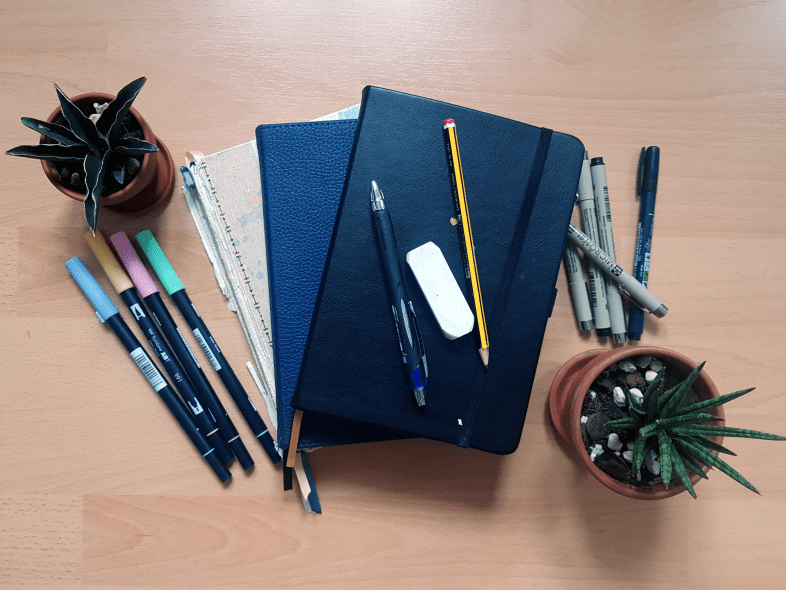
The idea behind bullet journaling is deceptively simple and yet it has completely changed my approach to planning and to do lists. The Bullet Journal Method was introduced by Ryder Carroll as a way to keep of track of appointments, to dos and anything else you might want to jot down. If you have never heard of it, Ryder Carroll explains the system here in video format – more details, tips and tricks can be found on https://bulletjournal.com. The best thing about bullet journaling for me is its flexibility – which is why everyone’s bullet journal will look different. So I decided to share how I use my bullet journal and why it works so well for me.
A planning tool
First and foremost, I use my bullet journal as a planner and glorified to do list. It contains any yearly, monthly and weekly dates I need to remember as well as an obscene amount of to do lists. How does this translate into my spread?
Every 6 months (which is about the time frame I can fit into one journal), I will first set up a monthly overview, where I can jot down any dates and appointments that are happening in the coming months that are not yet set up in detail. I have also started adding a “later” tab for dates more than 6 months from now, since in particular wedding invites and some holidays are often set very early in advance. A monthly overview might look like this:
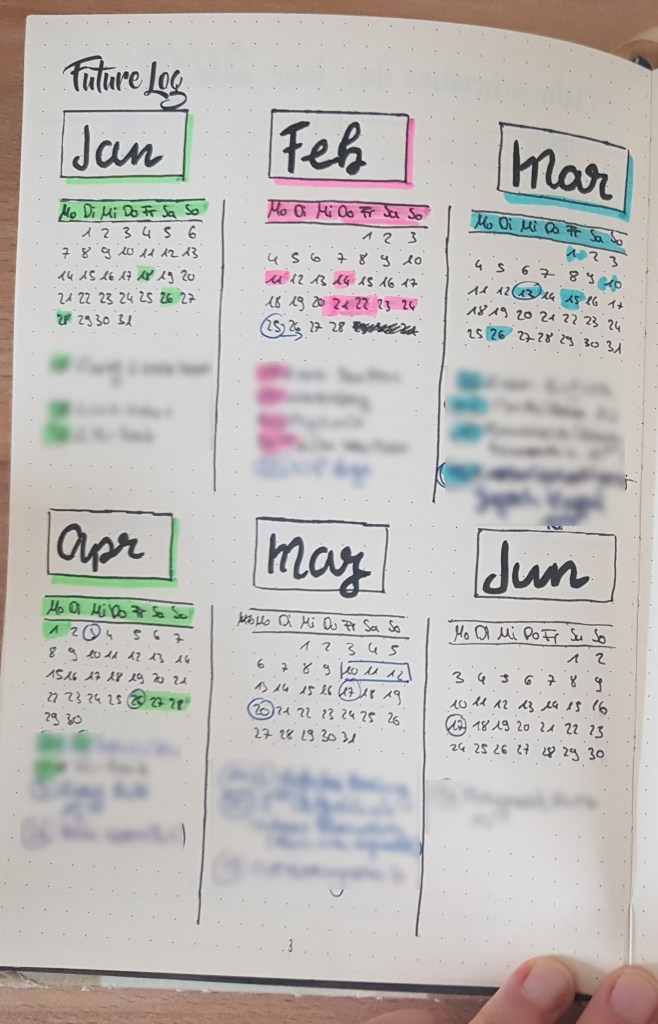
Often you see YouTubers putting 6 months on one page: this was horrible for me and my naturally messy and big handwriting! 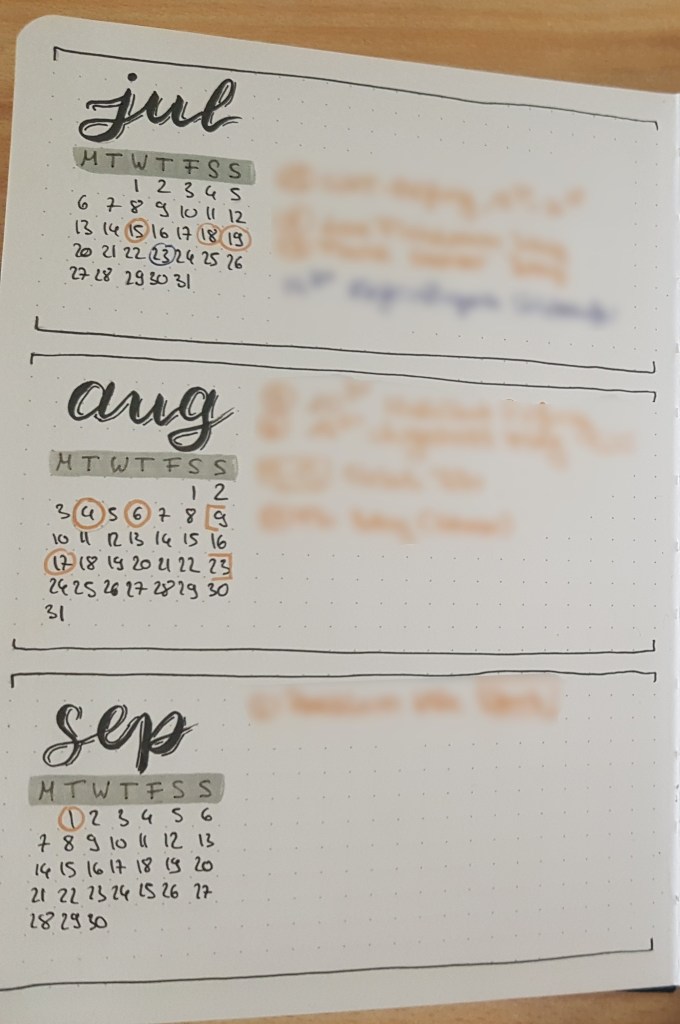
I now fit 2 or 3 months on one page and use a horizontal layout to have enough writing space
Once a month, I then setup for the coming month. For me that entails a cover page, the monthly calendar and the first weekly. The monthly cover page serves no real purpose and is thus entirely skippable – I, however, enjoy it as an artistic separator of the months and will do one unless I am not in the mood for drawing. These are some example cover pages that I really liked:
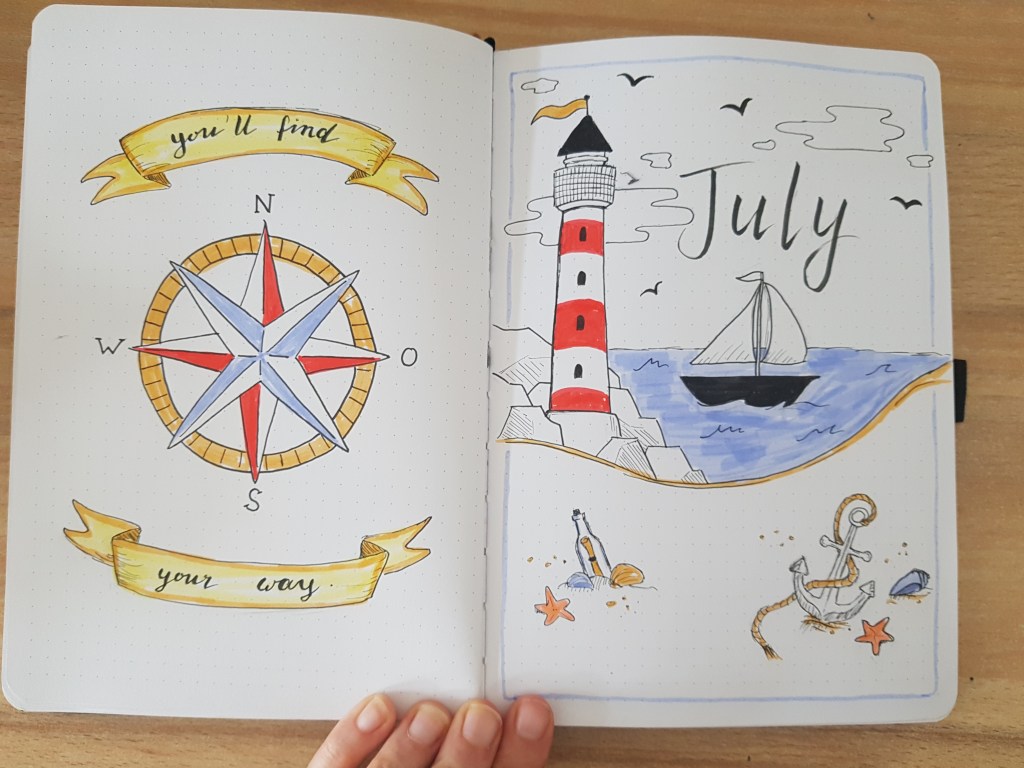
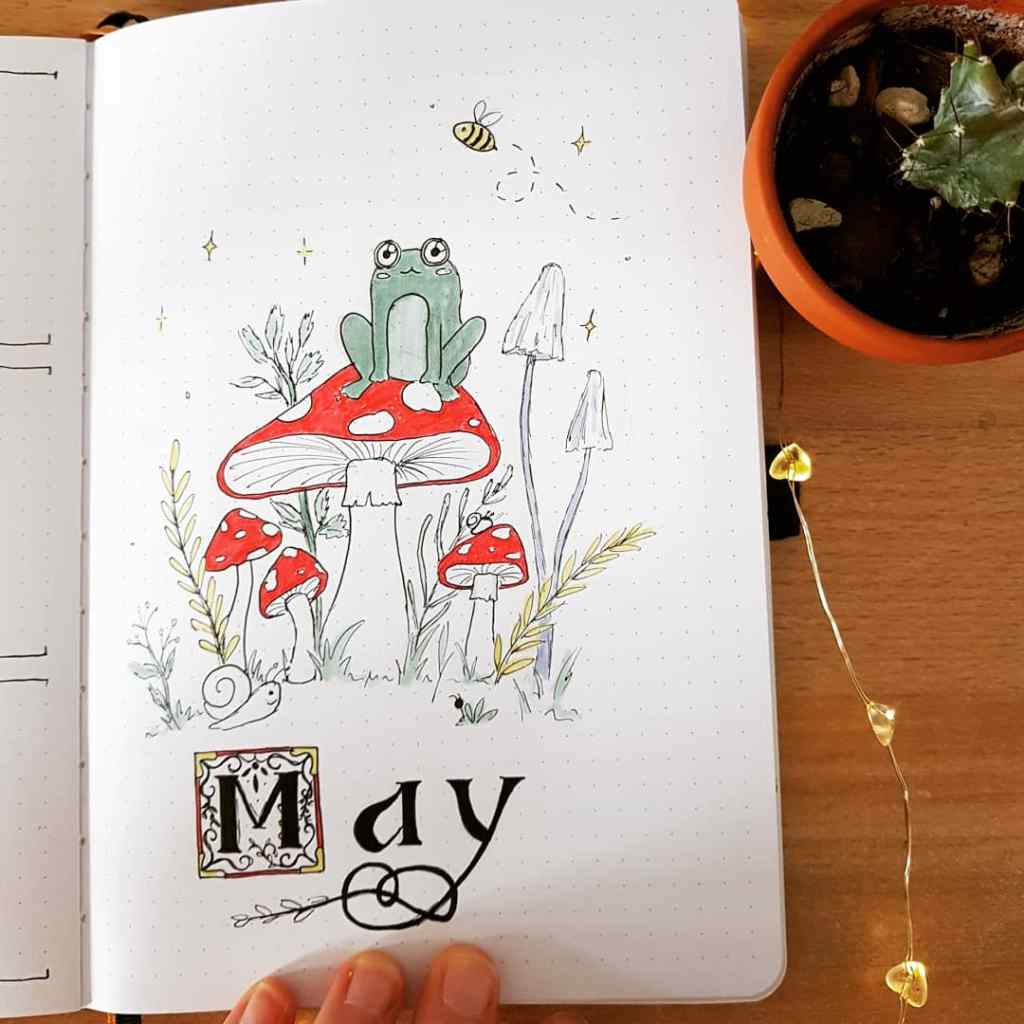
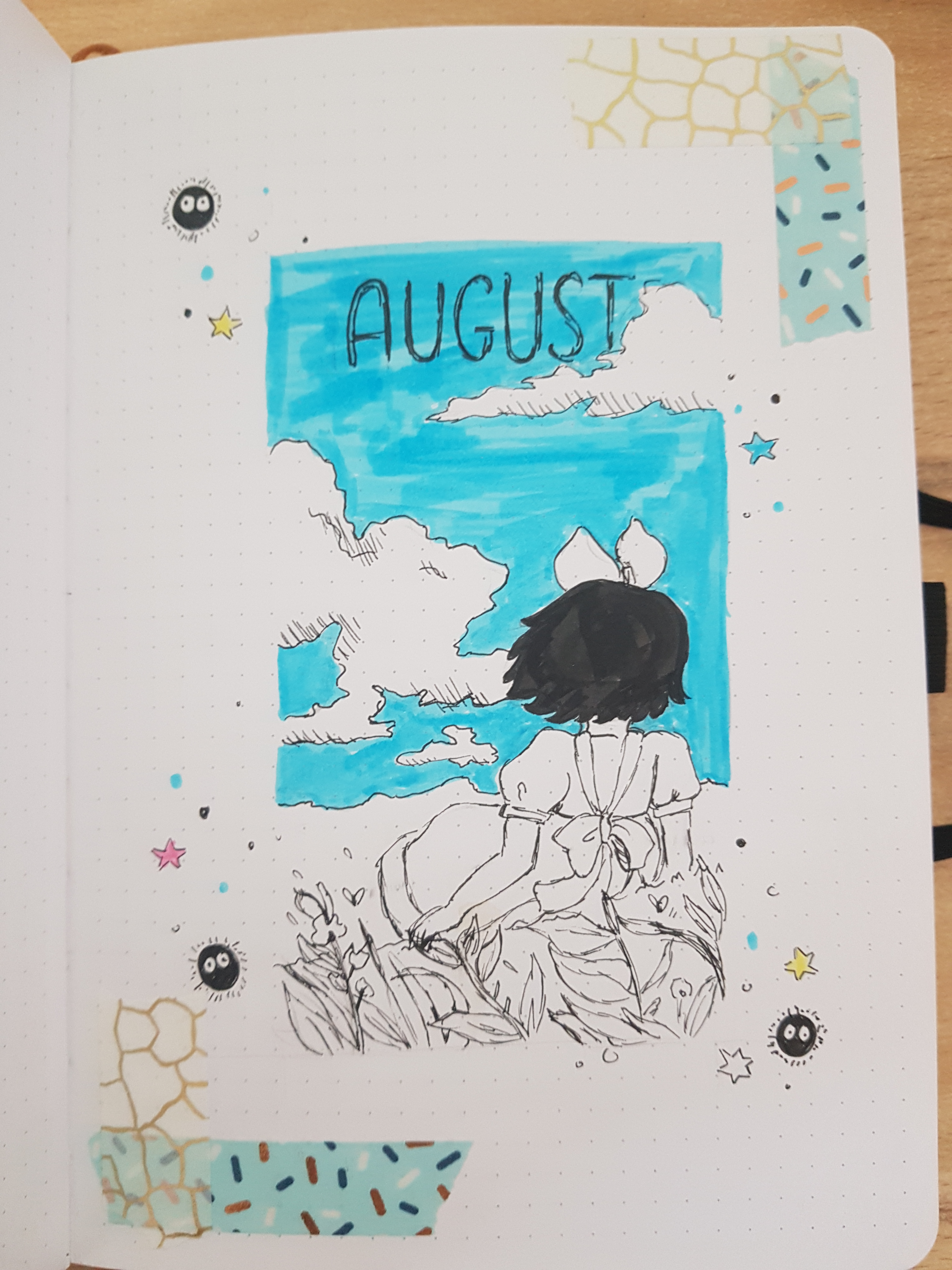
As you can see, I like to use some kind of theme every month – inspired mostly by bullet journal YouTubers and Instagrammers – but then I often end up switching it up during the month to not having to draw the same doodles over and over again. If I am not feeling motivated, I also completely abandon themes and just use simple to do lists throughout the month. . For me, it all depends on my creative energy. Remember, there are no rules on what a bullet journal must look like. Very importantly, it is not at all necessary to make your bullet journal “pretty” and colorful. First and foremost it should be functional for you. For me this works well, since I enjoy drawing and the drawings motivate me to actually use my journal. Classic calendars, on the other hand, bored me and mostly ended up unused in my drawers after a few weeks, replaced by a plethora of to do lists strewn about. My way might not work for you – it actually probably won’t! Bullet journaling is all about finding the best planning spreads and layouts for you. If for example classic ready-made journals have worked well for you so far, there really is no reason for you to pick up bullet journaling except out of maybe curiosity.
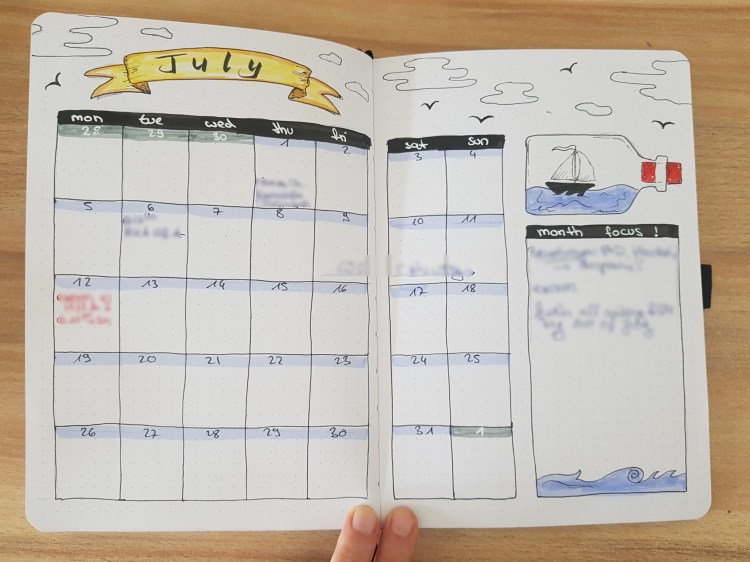
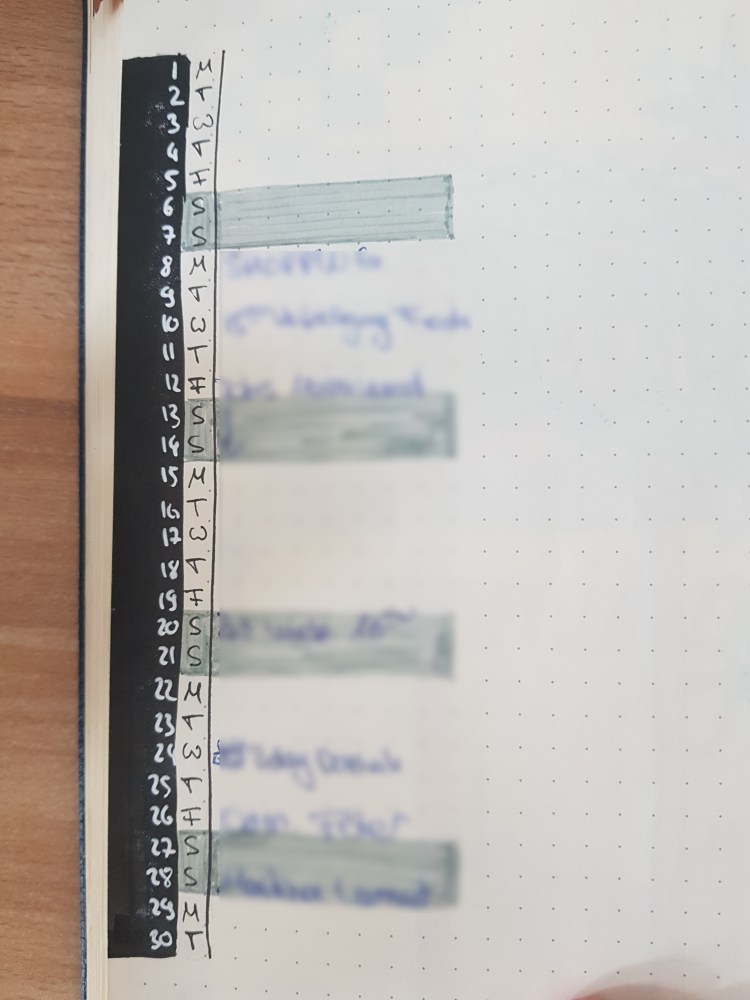
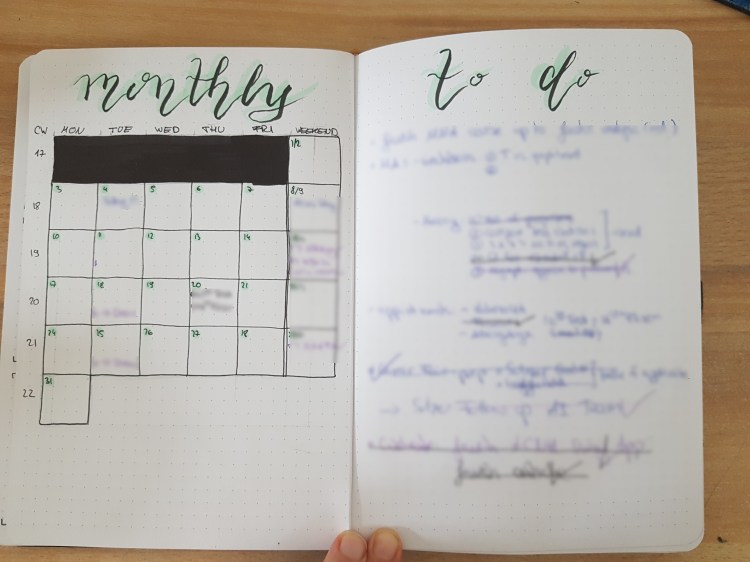
For the monthly calendar, Ryder proposes a simple list for every day of the month. For my big handwriting and visual brain, however this did not really work out, so I switched back to a classic calendar view. Truth be told is that I often skip making this overview, since I have realized that I am not using it all that much: my appointments can also be written in my yearly overview and my to dos go in the weeklies. Here are some examples nevertheless: The first is a classic calendar overview, the second is a vertical setup and the third is an example of a very simple 5 minute setup for a monthly where I felt unmotivated to create something.
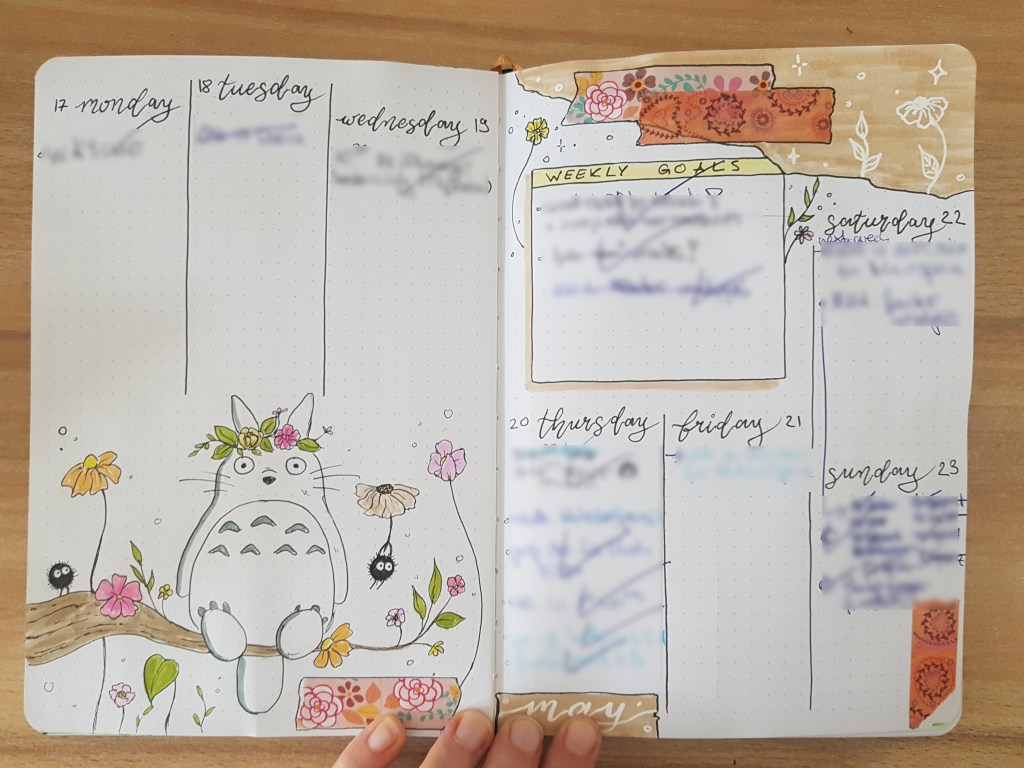
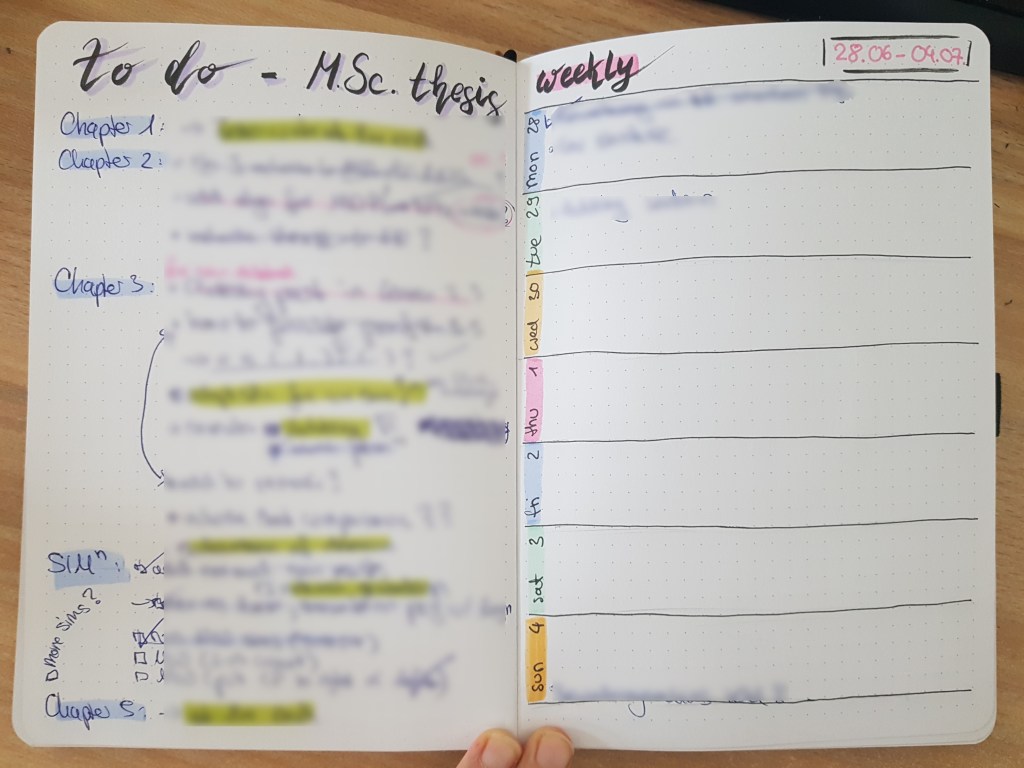
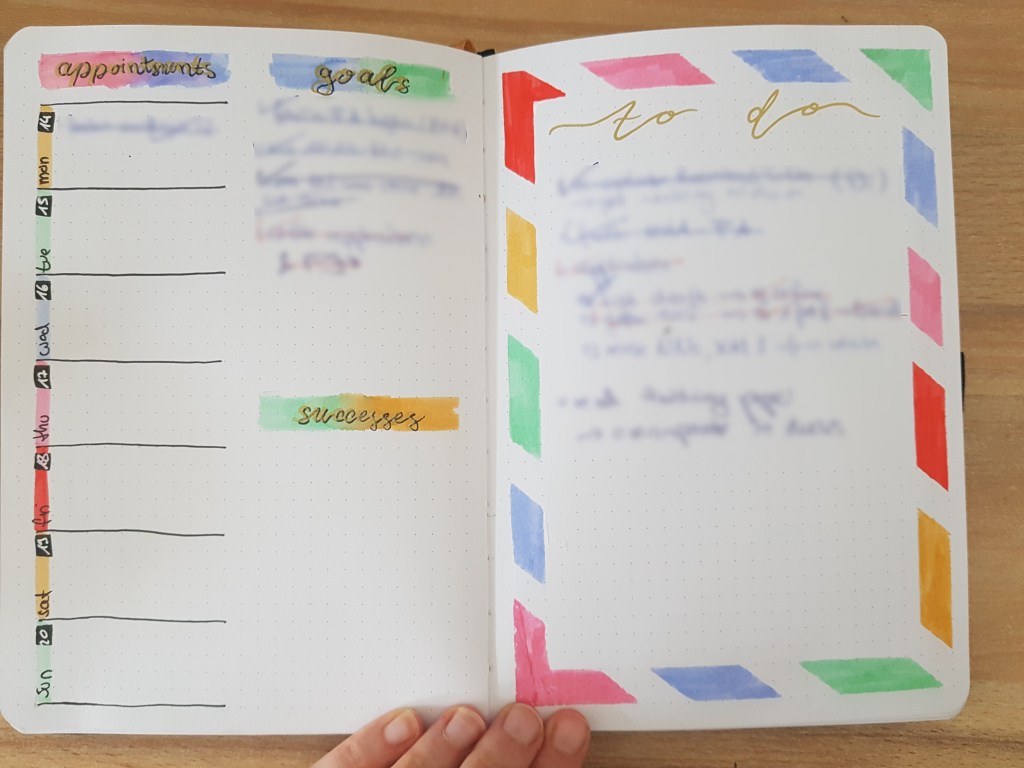
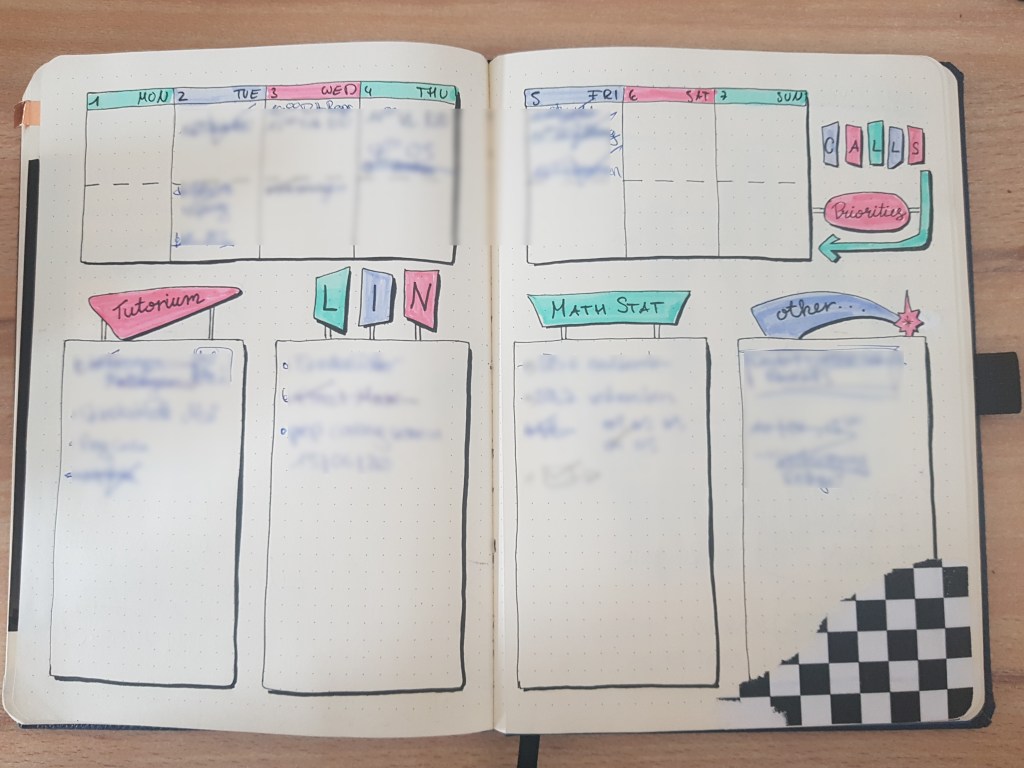
Lastly, throughout the month I will usually use weeklies to organize my to dos further. I started out with only classical weeklies as you know them from your classic calendars where each day has a pre-specified section on the page. This works fine most of the time – but during my studies and especially now, working on my master thesis, most of my larger tasks take longer to finish than just one day, so I now often prefer making a small weekly overview for appointments and then split all my tasks by category or making just one single master to do list to refer to throughout the week.
Here are some examples: the first one is a more classic weekly spread with one column for each day, the second is a very simple weekly spread with current to dos for my thesis on the left and the last two are examples of a to do masterlist and to do lists by category. As you can see, my actual notes are actually still very messy and chaotic – the bullet journal helps me contain them in a structured framework.
An effective, running to do list
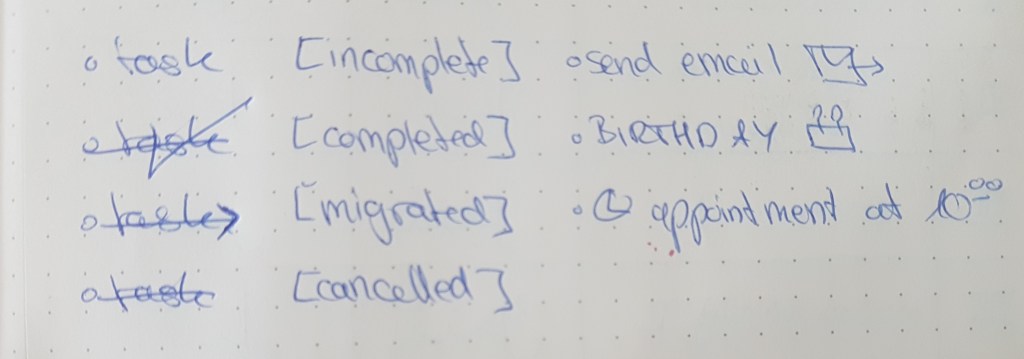
The actual magic of bullet journaling for me is how I write down and migrate my tasks from day-to-day and week-to-week. First of all, every day is a to do list – you can indicate what is what by the bullet you use, e.g. by representing tasks by dots, events by empty circles and notes by dashes. You can indicate a completed task by crossing out the bullet, and an uncompleted task that is migrated to the next day by an arrow. At least this is what the website recommends – I tried sticking to this system, but didn’t like it, because I enjoy crossing out entire tasks when they are done and kept mixing up dots, circles and dashes. I now write down tasks with whatever bullet I want (usually a circle) and take stock of them at the end each day: I cross them out with a big tick to indicate they are done. Tasks that are migrated are crossed out by a giant arrow and I immediately write them down for the next day. Tasks that are cancelled are just crossed out. Appointments get a clock symbol, emails get a letter and birthdays get a little cake. That’s it. The next day or week I can check which tasks are not yet crossed out and write them down again in today’s to do list. This goes on until they are done. This way no task can ever be forgotten or lost.
You might be thinking by now: phew, this still looks like a lot of work and to some extent you are right. The setup of every week, month and year definitely takes some time even if you use very simple designs, which you could save by using a traditional calendar. However I feel like it has been very beneficial for me to have a fixed time every week that I am forced to spend on thinking about and creating next week’s spread. During the setup, I automatically start reflecting on the last week and planning for the next one. It’s quite meditative and calming for me, as I can transfer the messy thoughts in my head into a clean and clear layout on a physical page. bulletjournal.com goes as far as calling bullet journaling “a mindfulness practice disguised as a productivity system” and honestly – I can see where they are coming from.
Additional planning spreads
But you might still be wondering: why go through all the effort of writing and drawing your own planner instead of buying a ready-made journal. Let me explain what else I get out of it: except for the already-mentioned flexibility in the layout of my weeklies, monthlies and yearlies, one HUGE advantage for me is the possibility to add additional pages to my planner however I want. If I want to make a study tracker for the exam next month, I can easily flip to the next page and create it and then put the next weekly after it. Do I need more planning space this week? I can just give myself an entire page for each day. Whether I want to write down gift ideas for friends, spew all of my running thoughts and feelings onto a piece of paper or create spreads of my latest pop culture obsession, I just flip a page and start writing or drawing. It sounds trivial, but it has honestly been a game changer for me. Setting up the journal week by week, even day by day, allows for a flexibility which fits much better with the way my brain works and thinks of tasks and future events. And having all my random study trackers, appointments, to dos, journal entries and so on in one place means they are easy to refer back to, make sense of and remember later-on.
Some of my non-planner related spreads in my bullet journal are…
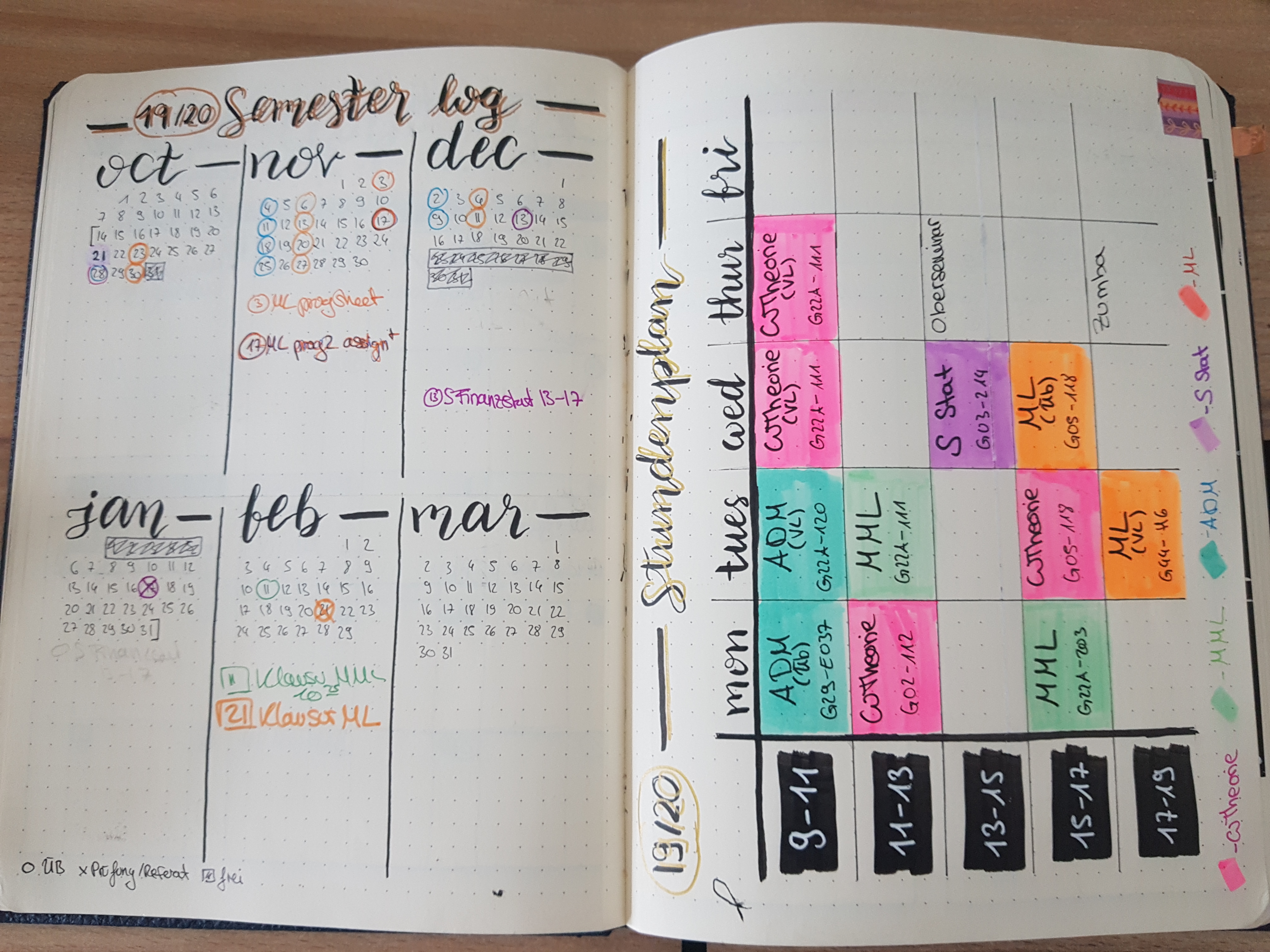
- a semester log for my exercise sheets and exams at university (useful)
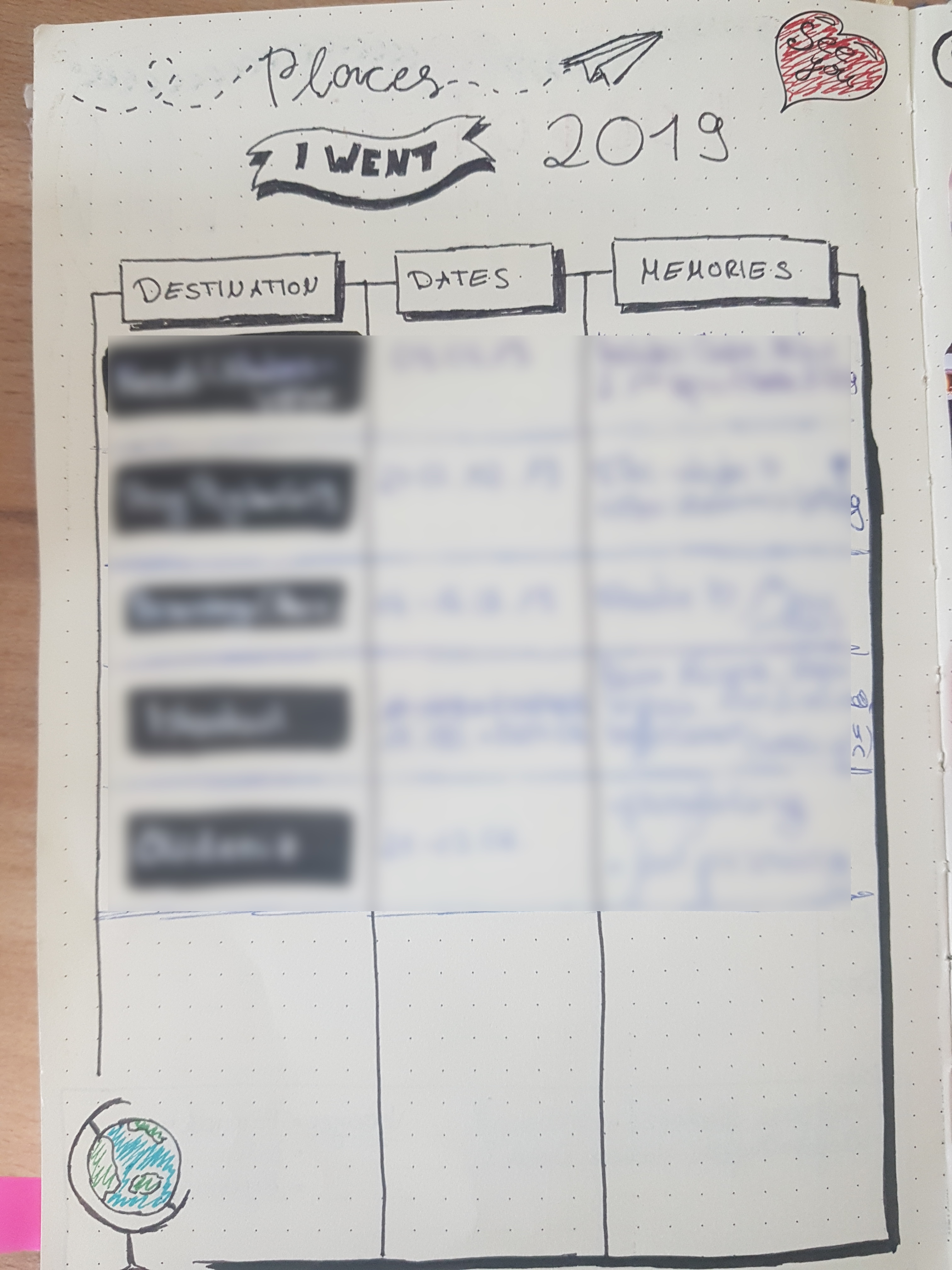
- an overview of places I went to in 2019 (reasonable and nice to have for nostalgic moments)
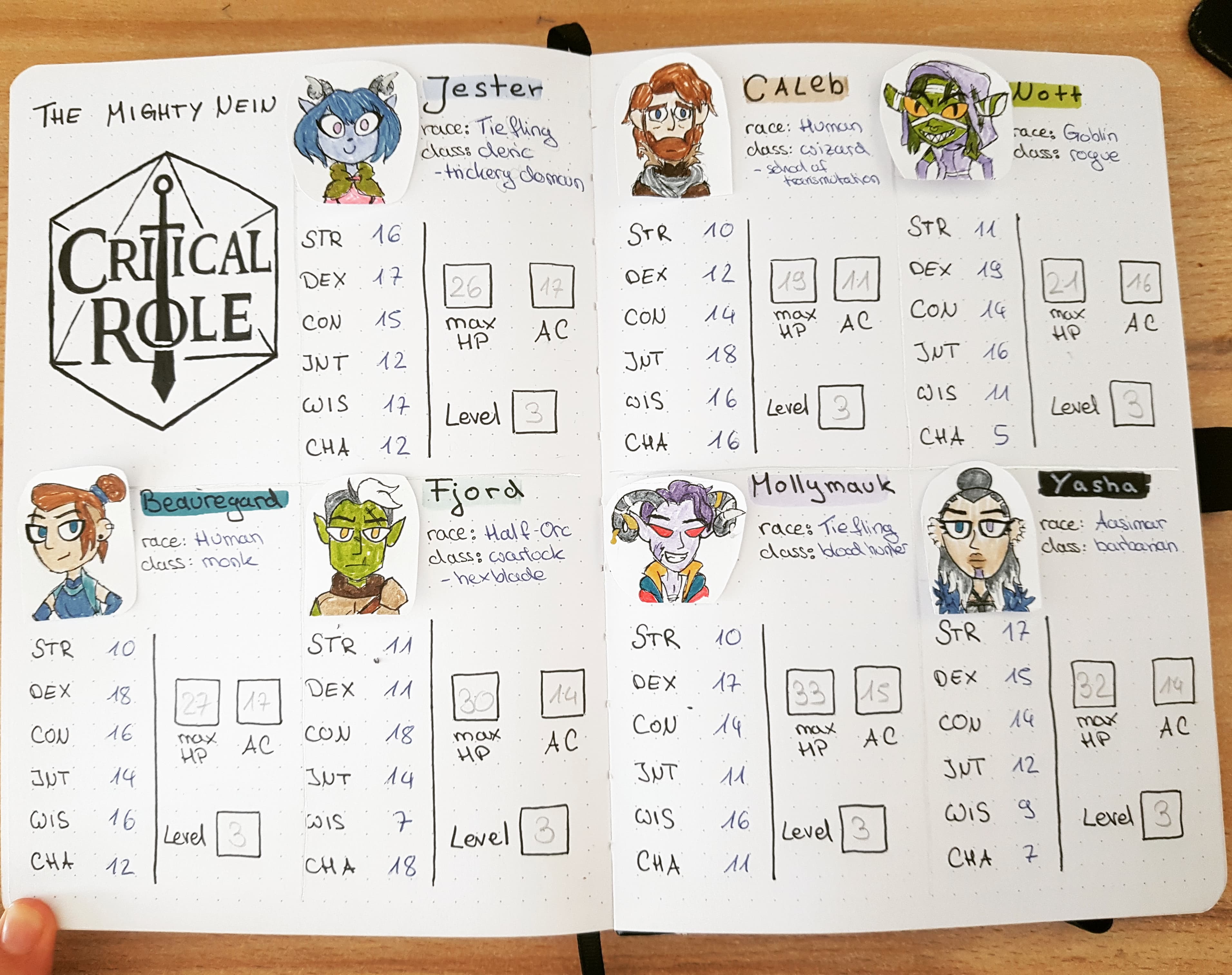
- an overview of all character sheets of the Mighty Nein campaign – a D&D campaign I started watching on YouTube some time ago (much less reasonable)
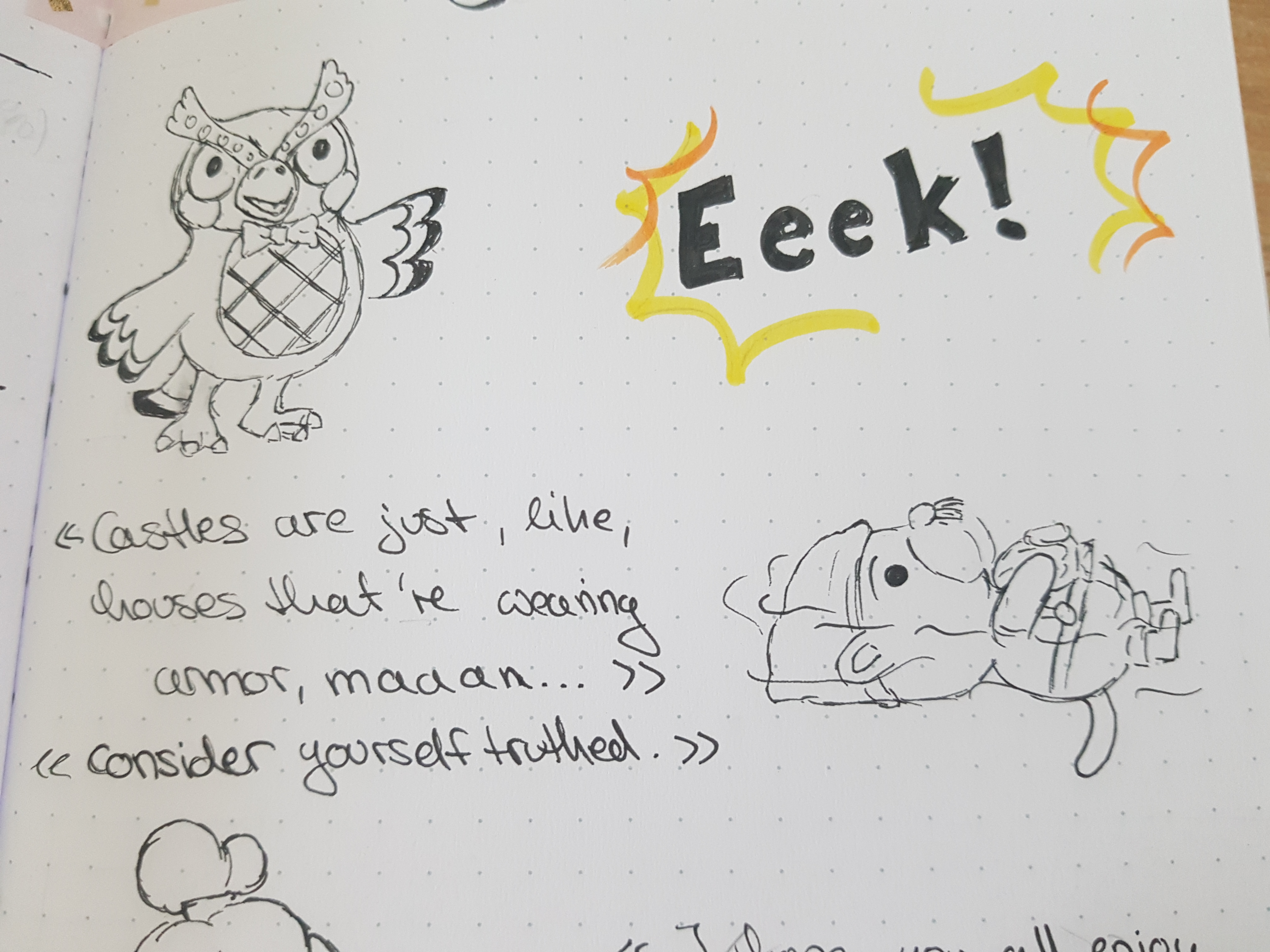
- a few Animal Crossing spreads, including one of my favourite NPCs (completely useless but … fun?)
Many YouTubers will also add monthly mood and habit trackers – I no longer create them, as I have proven to myself many many times that I will not fill them out.
Artistic outlet
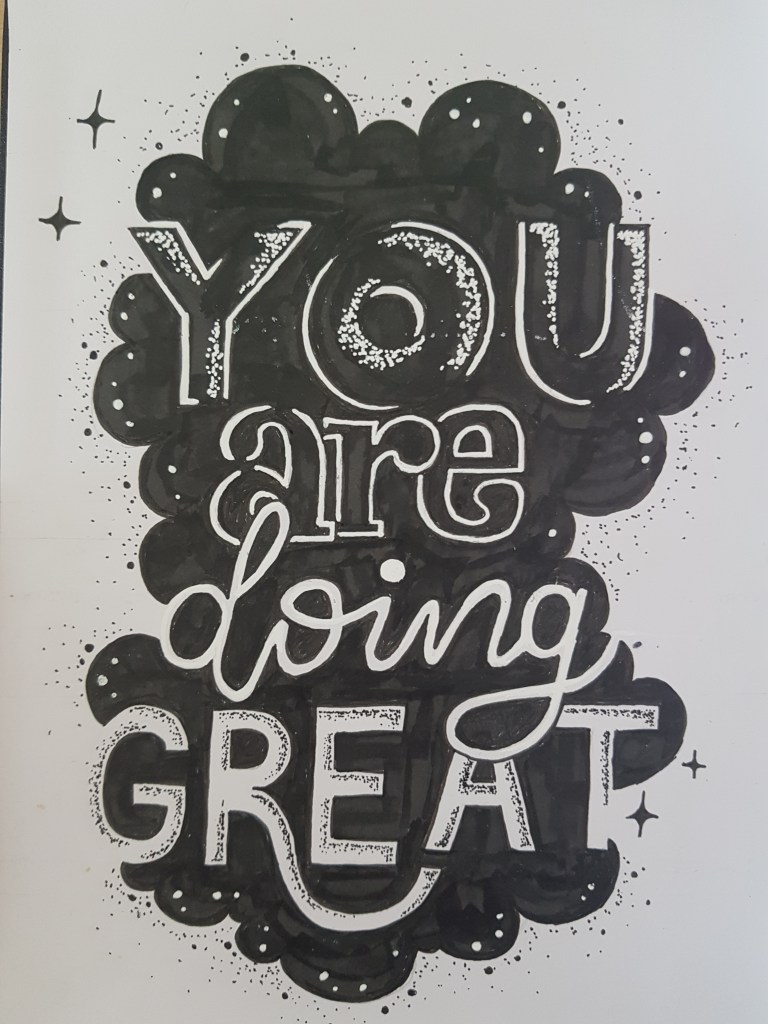
Lastly, my bullet journal has become a great outlet for my random spurts of artistic motivations. This will lead to me cute-ifying my weekly spreads and monthly pages, as we have seen so far, but also leads to just straight-up drawings and quote pages. Some of them are very niche and exclusively for me – such as this kinda weird-looking Angela Merkel, as seen in the lofi merkel video that went viral during the first Covid lockdown in 2020 in Germany.

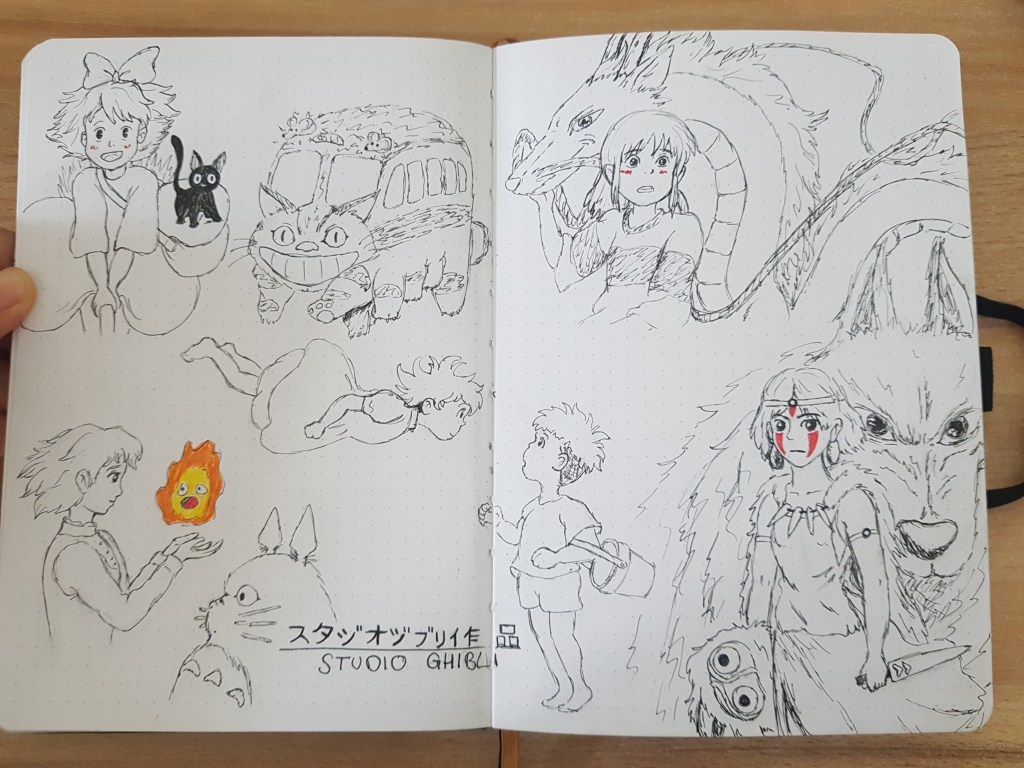
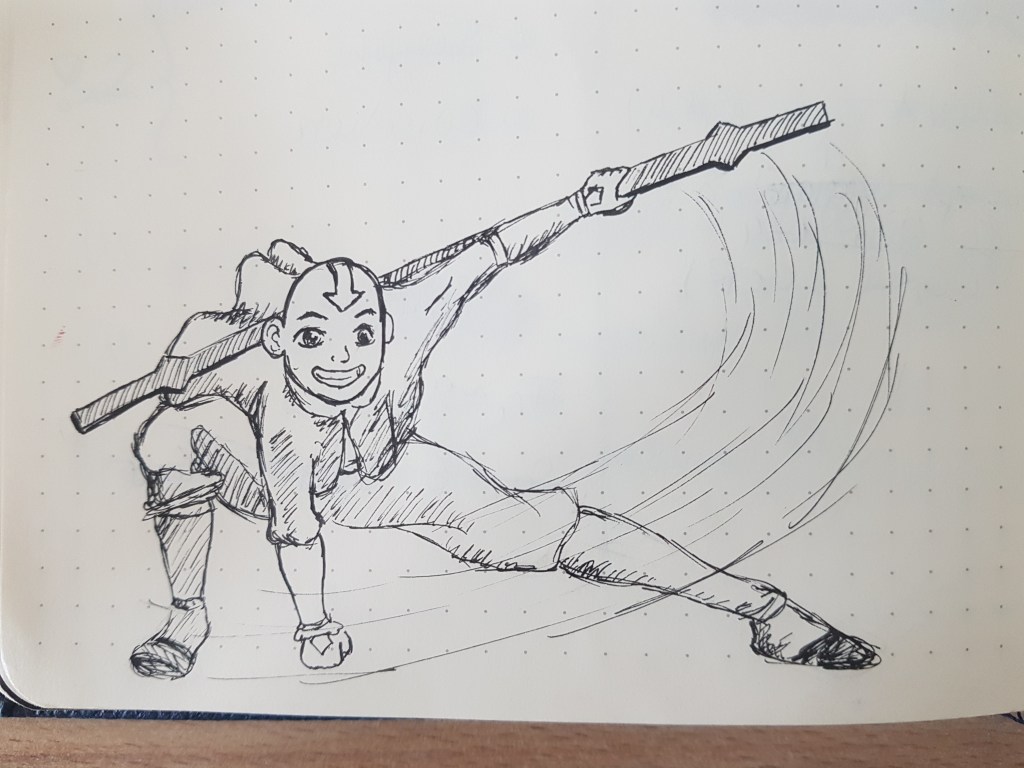
But leafing through my bullet journal, you will also find more “traditional” drawings and lettering. There’s e.g. a Ghibli page, a rendition of Dragon Age’s Cullen Rutherford and Aang from Avatar.

Conclusion: What makes bullet journaling work for me?
- everything is bundled in one book
- it forces me to take time aside for planning regularly as I setup the next spreads
- rewriting my todos again and again and again helps me remember them
- it is pretty, so I like looking at it and using it daily
- it is flexible: I can skip a week, add in additional spreads, adapt layouts etc.
Some of my favourite bullet journal creators
If you feel inspired to include more artistic spreads or discover other ways to organize your monthlies and weeklies in your bullet journal – most of the spreads shown so far have been recreated from or inspired by the following artists:
- AmandaRachLee: she’s my default bullet journaler and an absolute queen. I have recreated and adapted many of her themes (YouTube, Instagram)
- Julianne Doodles: she makes super cute and original spreads – they are often too much work for me to recreate, but are absolutely adorable to look at (YouTube, Instagram)
- Plant-based Bride: she uploads her own and her husband’s setups, so twice the content! I enjoy how she dabbles in different art styles and many of her setups are insanely creative (YouTube, Instagram)
- ItsyBitsy by Montira: a smaller channel, but she makes very pretty spreads. Her style has become more elaborate lately, but some older plan with mes are easier to recreate (YouTube)
- Inprint: she has a very clean style, usually using colorfull watercolor with more precise ink drawings and it looks 10 out of 10 every time (YouTube, Instagram)
 my statistics corner